News Update :

Popular Posts

Showing posts with label cancer. Show all posts

More than 50% cancers preventable

Monday, 2 April 2012

More than half of all cancer is preventable and society possesses the requisite knowledge to act on this information, says a new study.
Investigators from the Washington University School of Medicine, St. Louis, have outlined obstacles that stand in the way of making a huge dent in the cancer burden in the US and around the world.
"We actually have an enormous amount of data about the causes and preventability of cancer," said epidemiologist Graham A Colditz, at the Washington School of Medicine, the journal Science Translational Medicine reported.
According to Colditz and his co-authors, lifestyle choices people make, from tobacco use to diet and exercise, play a significant role in causing cancer, said a Washington university statement.
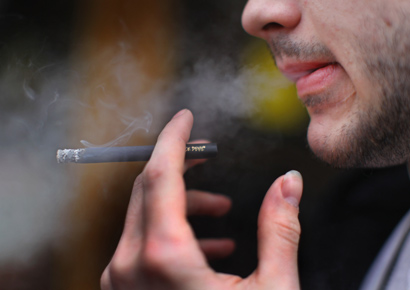
Specifically, researchers cite data demonstrating that smoking alone is responsible for a third of all cancer cases in the US. Excess body weight and obesity account for another 20%.
But beyond individual habits, they argue that the structure of society itself — from medical research funding to building design and food subsidies — influences the extent of the cancer burden and can be changed to reduce it.
The obstacles they see to implementing broad cancer prevention strategies are: Skepticism that cancer can be prevented.
Smoking rates in different states demonstrate that 75% of lung cancer in the US could be prevented with elimination of cigarette smoking.
The short-term focus of cancer research: Benefits of prevention may be underestimated because they take decades to show up, and research funding often spans five years or less.
Strategies like vaccination against cancer-causing viruses, such as the human papilloma virus that causes cervical cancer, work best when begun early, in this case before young people begin sexual activity.
Treatments focus only on a single organ after diagnosis but behavioural changes reduce cancer and death rates from many chronic diseases.
Health experts have a moral responsibility to highlight cancer risk factors even without knowing the biological mechanism by which they cause cancer.
Tobacco policy and government subsidies don't do enough to discourage unhealthy behaviour, and in some cases they make the unhealthy options more accessible, especially in low-income communities.

Cancer killing younger people in India, tobacco main cause

Saturday, 31 March 2012


(Reuters) - Cancer is killing younger people in India and affecting far more poor and less-educated villagers than wealthier, better-educated urban people, researchers reported on Wednesday.

"Cancer appears earlier (in India) than say in China or the U.S., so it's a disease of the young," said the lead author of the paper, Professor Prahbat Jha at the Centre for Global Health Research at the University of Toronto in Canada.
Jha said this could be because of India's younger population and the long-standing use of tobacco, which is the main cause of cancer in the country and responsible for 40 percent of cancers in men and 20 percent in women.
In men, the top three cancer killers were oral, stomach and lung cancer, while in women, they were cervical, stomach and breast cancer.
"The males have been smoking for a very long time, even longer than the Chinese and the patterns of diseases that come from prolonged smoking can occur in a population even at a younger ages," Jha told Reuters in a telephone interview.
According to The Tobacco Atlas, 26.2 percent of males in India use tobacco, either smoking or chewing it, or both. For females, 3.6 percent use tobacco and most of them chew it.
Chewing tobacco has long been linked to oral cancer, and this study found that the number of oral cancers was twice that of lung cancer in India.
Jha said the most important message from the study, which was published in The Lancet, is for India's government to increase tobacco taxes and prices substantially - which studies have shown to be the single most effective measure to reduce smoking.
"Higher tobacco taxes are as close to an effective anti-cancer vaccine as you can get," Jha said, although he noted that the government's budget on March 16 failed to raise tobacco taxes or prices.
The study also found that cancer rates varied significantly between different states in the country and between villagers and city-dwellers.
"Cancer death rates were two-fold higher in the least educated than the most educated, and (the differences) were similar between urban and rural areas. We used to think that cancer is a luxury of the rich, it is a suffering of the poor," Jha said.
Possible explanations were that tobacco use was higher among the less educated and that richer Indians tended to seek treatment earlier.
The authors called for better health services and vaccines that can protect people against certain cancers. They predicted that if vaccines against infection by the human papillomavirus (HPV) were available for girls and women in India, deaths from cervical cancer would be reduced from 33,000 to 7,000.
HPV is one of the most important risk factors for cervical cancer.

‘Most cancer deaths in 30-69 age group’

Thursday, 29 March 2012

Cancer caused 5,56,400 deaths in the country in 2010 and 71 per cent of those who died were aged between 30 and 69 years, according to findings of the Million Death Study, one of the largest studies ever of premature mortality in India.
Associate professor at Tata Memorial Hospital, Mumbai, Dr Rajesh Dixit, along with other researchers detailed the findings of the research in a paper titled ‘Cancer mortality in India: a nationally representative survey’ which was published in the Lancet on Wednesday.
According to the study, oral cancer was the most common fatal cancer in men with it causing 22.9 per cent deaths. Among women, cervical cancer continued to be the major killer (17.1 per cent). Tobacco was the biggest cause of cancer deaths. About 42 per cent of men who died had tobacco-related cancer. Among women, it was 18.3 per cent.
“Tobacco-related cancers have been the leading cause of cancer deaths. It was seen that there were twice as many deaths from oral cancers than lung cancers. What is important is that the disease struck the working-age bracket of the population,” said Dixit.
“India is obviously not doing enough in terms of taxation to control tobacco-related cancer,” said Dr Prabhat Jha, collaborator for the study and director, Centre for Global Health Research, Toronto.
“Even in the last budget whatever increase happened would have accounted merely for inflation. Look at France. In the 1990s there was a national consumption of six cigarettes per person per day and when Jacques Chirac tripled it, the consumption halved. Lung cancer rates also came down within a few years.”
An interesting observation was that there may be hidden agents of cancer that may explain the varying rates of incidence. “The varying mortalities are intriguing. For example, the northeastern part of the country has very high mortality whereas states immediately adjacent like Orissa, Bihar and Jharkhand have a quarter of that mortality, as does southern India. There could be genetic reasons, some circulating viruses or may be something in the diet but we do not know what. So there is a need for more research,” said Dr Jha.
 

© Copyright latestentries 2010 -2011 | | Privacy | Disclaimer.